How getnarrateai Works: Three Steps, Zero Formatting
Last updated: August 6, 2026
There's a specific kind of dread that shows up on a Sunday night before a Monday board meeting. You know the numbers. You've known them for days. What you don't have yet is the document — the actual narrative, formatted, proofread, ready to project on a screen in front of people who will ask questions about every paragraph.
That gap between "I understand the numbers" and "I have a report" is what getnarrateai is built to close. Here's exactly what happens in between.
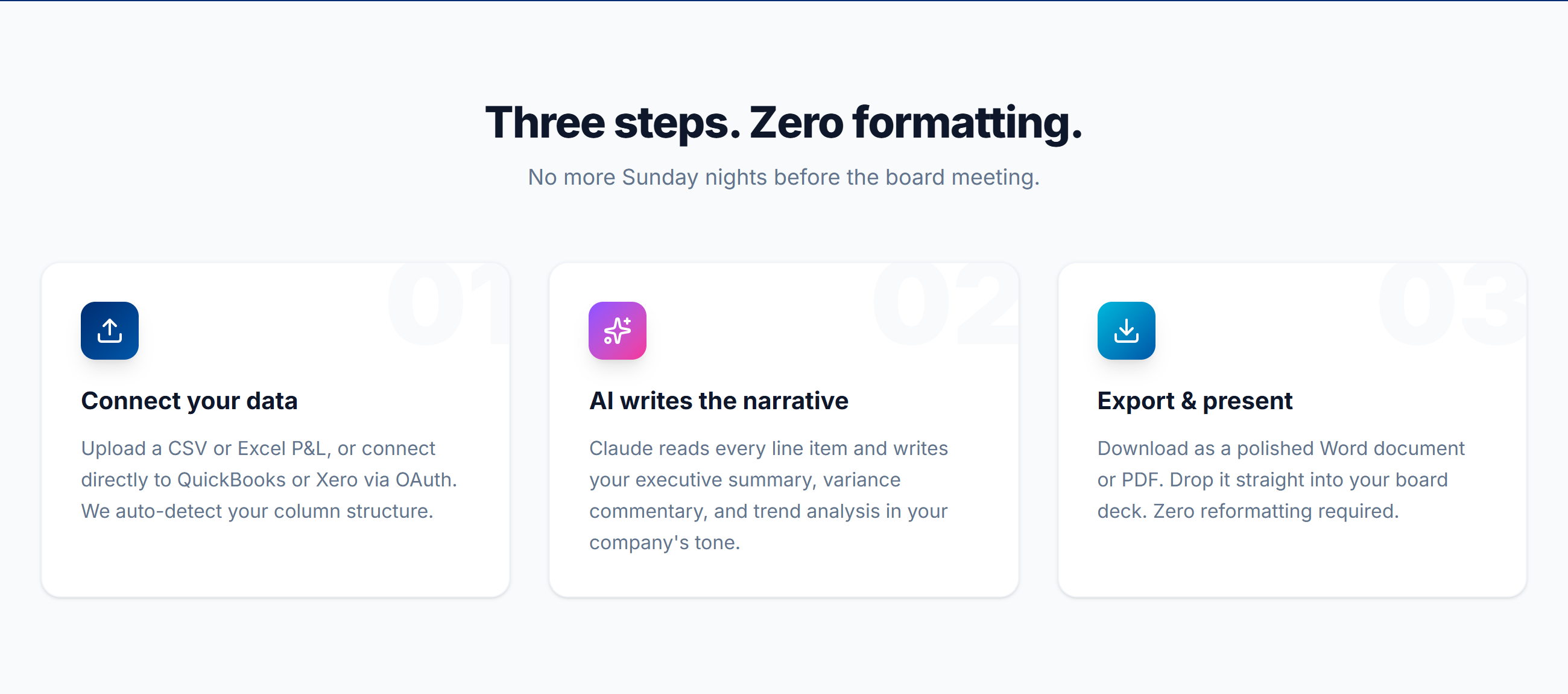
Step 1: Connect your data
You either upload a CSV or Excel P&L, or you connect QuickBooks or Xero directly through OAuth. There's no template to conform to and no column-mapping spreadsheet to fill out first — getnarrateai auto-detects your account structure, whether that's a clean three-column export or a messier internal format with subtotals and rollups.
Step 2: The AI writes the narrative
This is the part that used to be the actual work. Claude reads every line item — actual, budget or prior period, variance — and writes the executive summary, the variance commentary, and the strategic commentary, in that order, the way a controller would explain them to a board. It's not a template with numbers dropped in; it reads the shape of your specific variances and explains the ones that matter.
Step 3: Export and present
Download it as a polished Word document or a PDF and drop it straight into your board deck. No reformatting, no re-typing numbers into PowerPoint, no fixing a chart that broke when you pasted it into a different template.
Start to finish, this takes about 30 seconds of processing time. The bigger change is what it removes from your week: the hours of translating a spreadsheet into prose, one variance at a time, alone, usually on a weekend.
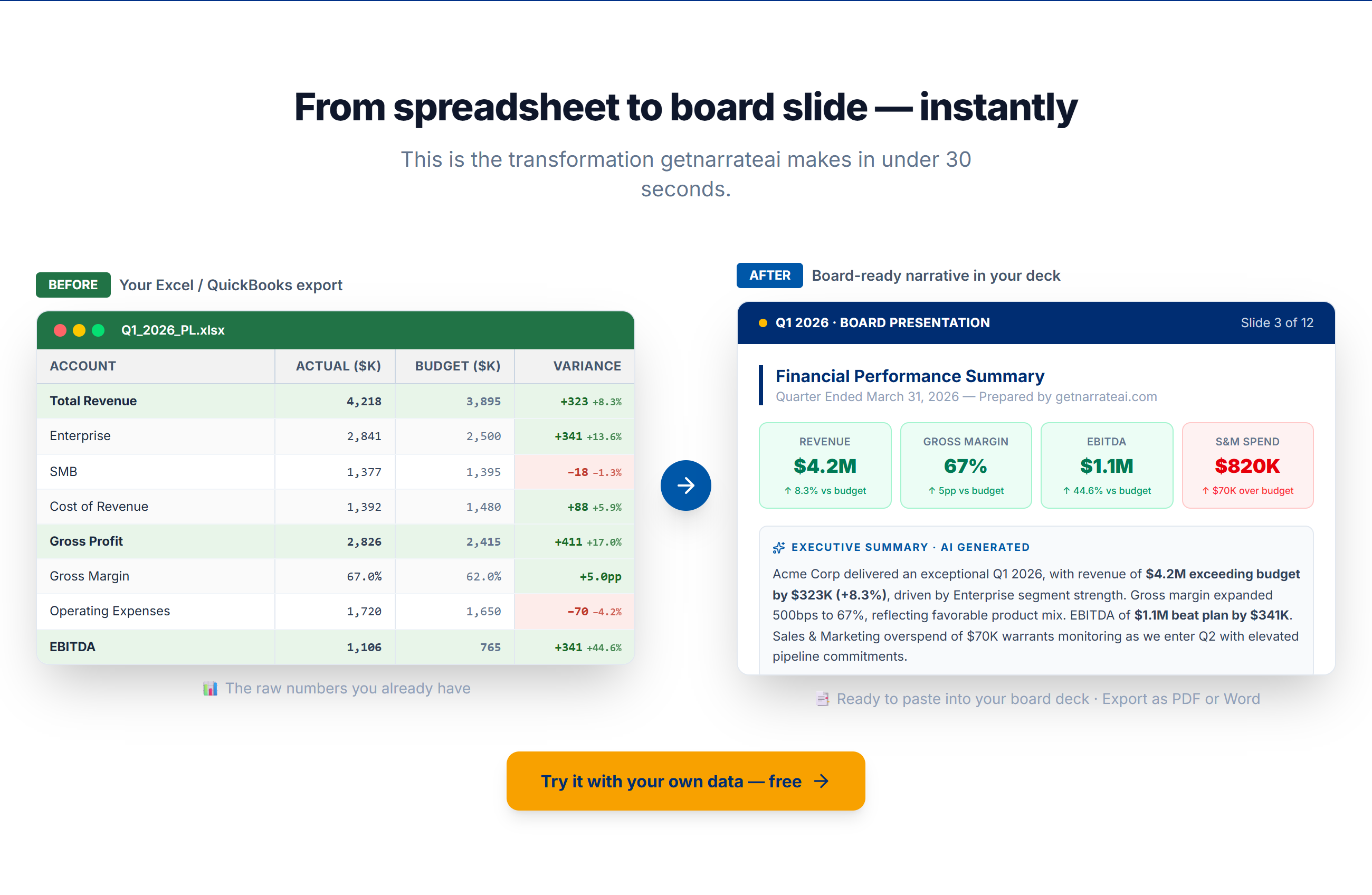
Want to see what each part of the output actually looks like? Read on for a closer look at the executive summary, variance analysis, and strategic commentary sections, or just try it with your own numbers at getnarrateai.com.