Strategic Commentary: The Section That Answers "So What Happens Next Quarter?"
Last updated: August 6, 2026
Every board meeting eventually gets to the same question, in some form: "okay, so what happens next quarter?" A report that only explains what already happened doesn't answer that. It takes a step back — looking at the pattern across the last few periods, not just this one — to say something useful about what's coming.
That's a genuinely different kind of writing than variance explanation. It requires holding several quarters in your head at once, noticing what's trending rather than what's just moved, and being willing to flag a risk before it shows up as a bad number.
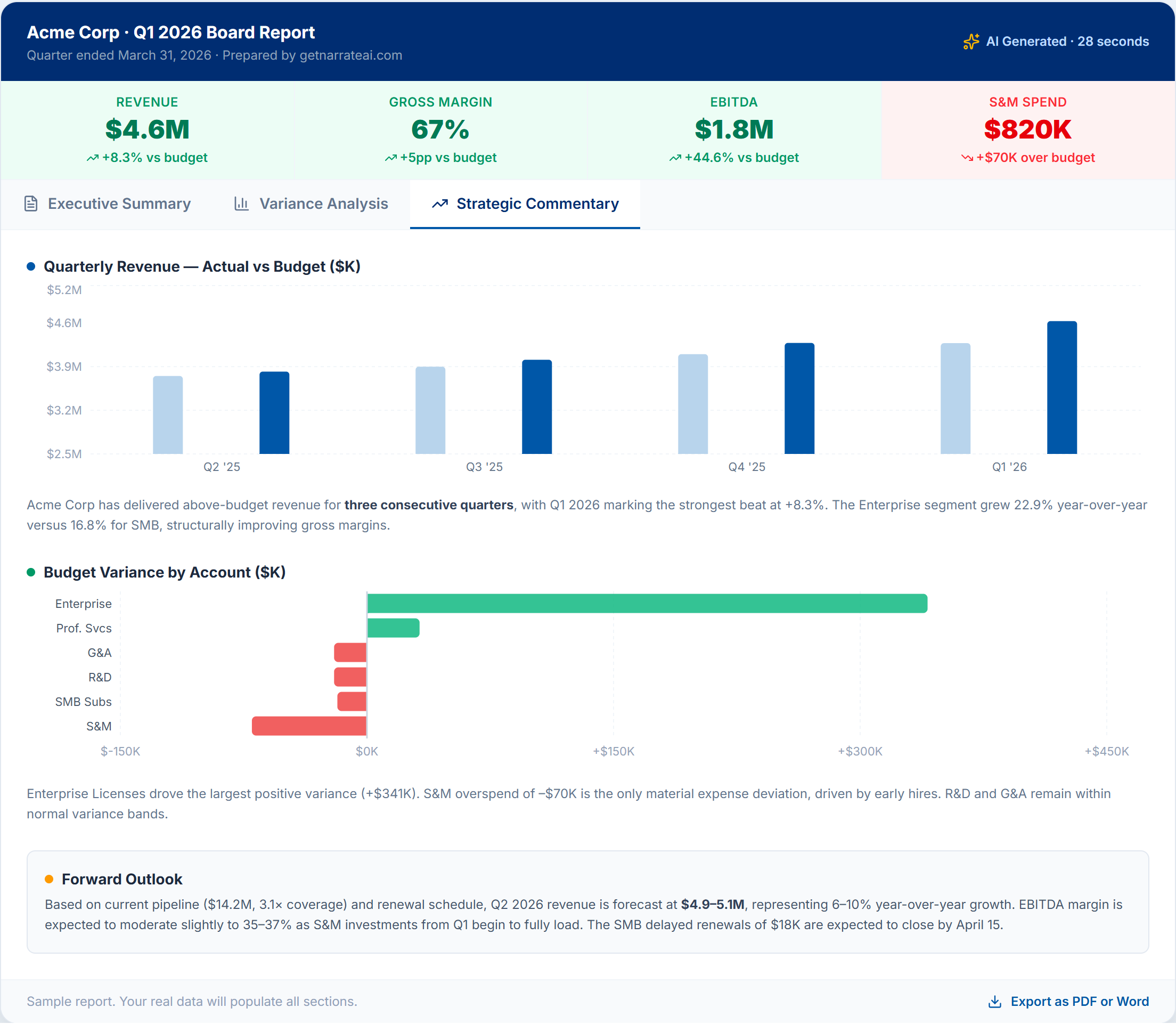
Trend charts and a forward-looking outlook, generated from the same data as the rest of the report.
What belongs in strategic commentary
Good forward-looking commentary does three things: identifies patterns across periods (is this variance a one-off or the third quarter in a row it's happened?), flags risks before they become surprises (elevated pipeline commitments this quarter usually mean elevated spend next quarter), and states the implication plainly, not just the observation.
How getnarrateai handles it
getnarrateai's strategic commentary section (this used to be called "Trend Analysis" internally, before we realized "strategic commentary" is what it actually is) looks at trend and variance data together — current vs. prior period, YoY change — and writes forward-looking narrative that names the pattern and its implication, in your company's voice. It's written in the same pass as the rest of the report, so it stays consistent with the executive summary and variance analysis above it rather than contradicting them.
It's the section that turns a report from "here's what the numbers were" into "here's what I think you should be paying attention to" — which is usually what a board actually wants from its CFO.
This wraps the three-part report structure — see how it starts in the executive summary and variance analysis posts. Or try it on your own numbers at getnarrateai.com.